How Does a Water Softener Work? A Guide for Racine WI Homeowners
Understand how a water softener reduces hard water minerals, why salt matters, and how the system helps make everyday cleaning easier for Racine WI households.
What Makes Water Hard?
Hard water contains dissolved minerals, mainly calcium and magnesium. These minerals are naturally present in water and can leave white spots on faucets, cloudy marks on glassware, and buildup around showerheads. You may also notice soap that does not lather easily or laundry that feels stiff after washing.
For Racine homeowners, understanding how these minerals affect everyday water use can help when deciding whether a water softener is a practical addition to the home. The best starting point is to understand what the system actually does and how it works.
How a Water Softener Removes Hardness
Most traditional water softeners use a process called ion exchange. Inside the system is a tank filled with small resin beads that carry sodium or potassium ions.
As water passes through the resin, calcium and magnesium ions attach to the beads. In exchange, the beads release sodium or potassium ions into the water. This process reduces the minerals responsible for water hardness before the water travels to faucets, showers, washing machines, and other household fixtures.
Think of the resin beads as tiny mineral exchange stations. They capture the minerals that cause hardness and exchange them for other ions, helping reduce the effects of hard water throughout the home.
Why Does a Water Softener Need Salt?
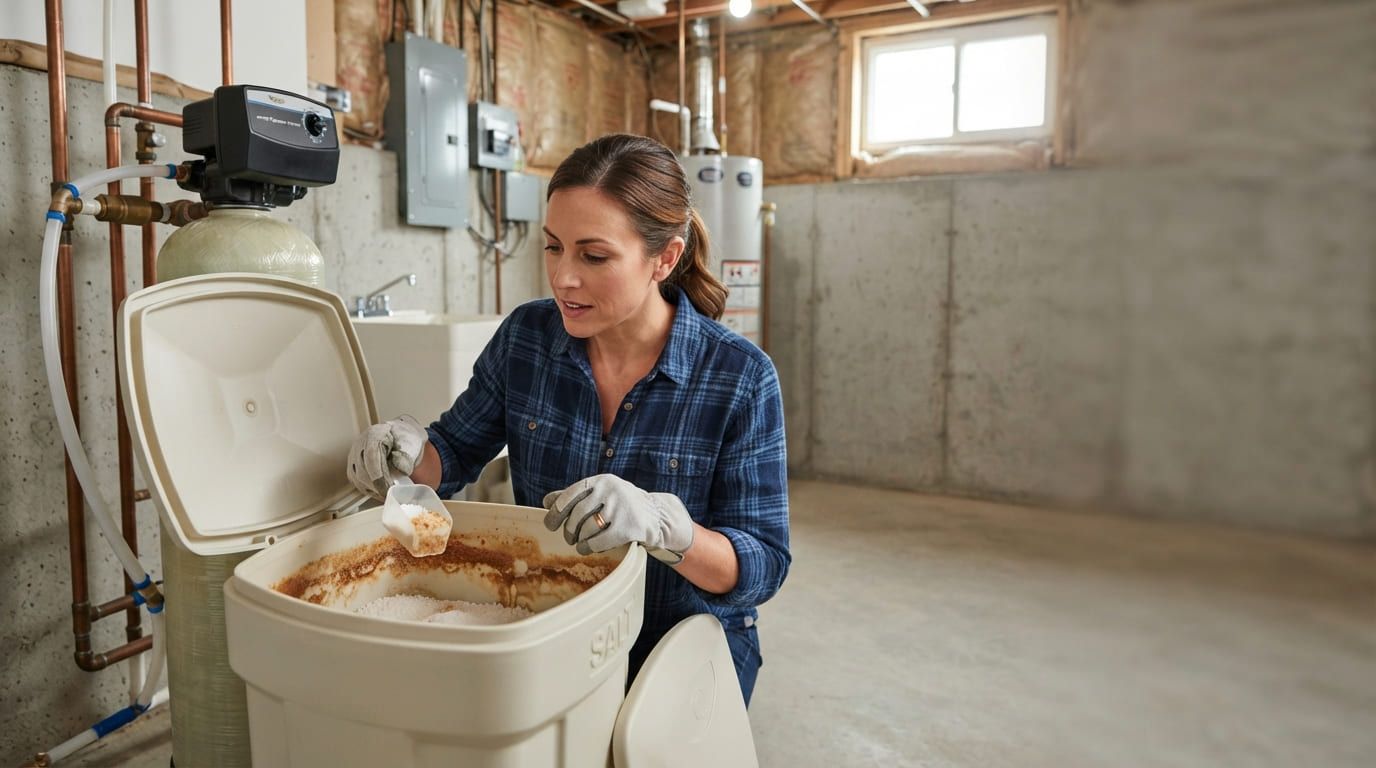
Salt is an important part of many conventional water softening systems because it helps restore the resin beads so they can continue removing hardness minerals.
During normal operation, the resin gradually collects calcium and magnesium. When the system reaches its programmed regeneration point, it draws concentrated brine from the salt tank through the resin. This process removes the accumulated hardness minerals and prepares the resin to soften water again.
The discharged minerals leave through the system's drain during regeneration. The softener then returns to service and continues treating water.
Salt does not directly remove hardness simply by sitting in the tank. It supports the regeneration process that keeps the resin working. Some alternative systems use different methods, so homeowners should always follow the instructions for their specific equipment.
What Happens When the Softener Runs Out of Salt?
When a salt based softener runs low on salt, it may not have enough brine available for effective regeneration. As the resin becomes loaded with hardness minerals, the system may gradually lose its ability to soften water properly.
Possible warning signs include renewed white deposits on faucets, spots on dishes, soap that seems harder to rinse, or water that feels different during bathing. These symptoms can also have other causes, so they do not automatically mean the salt tank is empty.
Check the salt level and make sure the system is not in bypass mode. If the salt supply is adequate but hard water symptoms continue, the system may need a closer inspection of its settings, regeneration cycle, resin, or other components.
Does a Water Softener Make Water Safe to Drink?
A water softener is designed primarily to reduce hardness minerals. It is not a complete drinking water treatment system and should not be relied on to remove every contaminant.
Municipal water quality and water hardness are also different measurements. The Racine Water Utility publishes drinking water quality reports that describe water testing and compliance with applicable standards. Homeowners can review these reports for general information about the public water supply, while a water hardness test can help determine the mineral level at their own tap.
If your household has concerns about lead, bacteria, iron, or other contaminants, use appropriate testing and treatment designed for those specific concerns rather than assuming a softener will address them.
How to Keep Your Water Softener Working Properly
Routine maintenance can help your system operate reliably. Check the salt level regularly, use salt recommended for your equipment, and avoid filling the tank beyond the manufacturer's guidance. Look for unusual salt buildup, keep an eye on regeneration settings, and follow the recommended cleaning schedule.
If you notice a sudden change in water quality, confirm that the bypass valve is in the correct position and check whether the system has completed its regeneration cycle. Persistent problems may require professional service, especially if the resin has deteriorated or the control valve is not operating correctly.
A water test can also help confirm whether the system is reducing hardness as expected. This is more reliable than judging performance by water feel alone.
Get Help Understanding Water Softening in Racine WI
Knowing how a water softener works makes it easier to recognize maintenance needs and decide whether your household could benefit from one. From mineral deposits on bathroom fixtures to spots on glassware, hard water can create recurring frustrations. The right solution depends on your water hardness, household usage, and the condition of your plumbing and equipment.
Racine Water Softener can help homeowners in Racine, WI understand water softening options and explore solutions suited to their household needs. Contact Racine Water Softener to learn more about water softener systems, maintenance, and ways to manage hard water.